





Finding an address and verifying one are different tasks. If you are selecting an email finder as well, compare Hunter.io alternatives and confirm the scope of each address check.
How We Compared Them
Every verifier checks syntax, MX records and mailbox existence. The differences that matter in practice:
- Pricing model — per-credit (and do credits expire?) vs included in a platform
- When verification happens — batch cleaning snapshots vs send-time checks
- Catch-all handling — compare the method, uncertainty labels and any additional validation stage
- Real-world accuracy — require the method, date and sample before treating a percentage as a benchmark
One structural note: email lists decay continuously as people change jobs. A list verified in January will bounce in June. That's why verification inside the sending flow — checked at send time — beats periodic batch cleaning for outbound teams.
1. DitLead
Best for cold outreach — verification inside the campaign
DitLead provides paid verification in the list/campaign workflow. Each verification uses 1 lead credit. Review the returned reason and uncertain results before using a contact; a prior check does not establish that the address will remain valid indefinitely.
Best for: Outbound teams who want verification continuously applied at send time rather than as a separate, metered list-cleaning step.
2. ZeroBounce
Best standalone verifier
ZeroBounce is the best-known dedicated verifier. Credits run from roughly $0.0028 to $0.0195 per email depending on volume, with a 10,000-credit subscription at $99/month. An accuracy claim needs a stated test method and sample; this article does not provide an independent benchmark. The main caveats: it's verification only, costs compound past ~50K checks a month, and catch-all domains are charged but inherently uncertain.
Best for: One-off or recurring list cleaning when sending happens on another platform.
3. NeverBounce
Best pay-as-you-go pricing
NeverBounce charges $0.008 per email at small volumes, falling to ~$0.003 at 100K+. It backs a 99.9% accuracy claim with a money-back guarantee — if a verified email bounces within 90 days, the credit is refunded. Watch two things: credits expire 12 months after purchase, and catch-all addresses are labeled rather than resolved.
Best for: Teams that verify in occasional large batches and want a refund-backed guarantee.
4. UpLead
Best data + verification combo
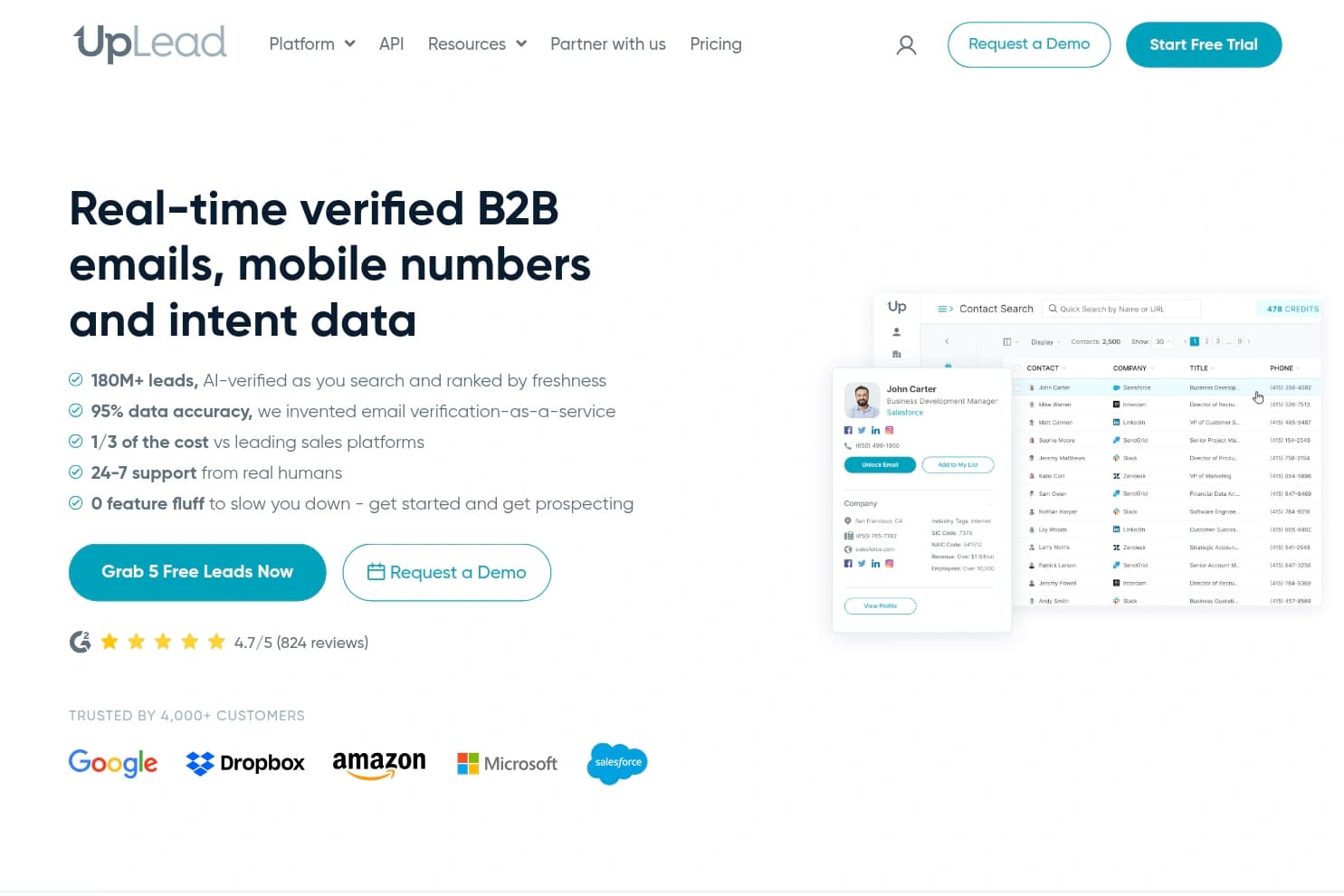
UpLead is a B2B database (~160–180M contacts) that verifies emails in real time at export, which keeps bounce rates low for lists sourced from it. It doesn't clean external lists as its core job — it's a prospecting tool with verification built into the export step. Plans run $74–$149/month with expiring monthly credits.
Best for: Teams sourcing new prospects who want addresses verified at the moment of export.
5. Hunter.io
Best for finder + verifier workflows

Hunter pairs its email finder with a verifier, so addresses you discover are scored before you use them. Verification is credit-based and tied to the broader Hunter subscription. It's a natural fit if Hunter is already your finder; less compelling as a standalone cleaning service.
Best for: Hunter users who want discovery and verification in one subscription.
6. Snov.io
Best budget all-rounder

Snov.io bundles an email finder, verifier and basic drip campaigns at aggressive prices. Verification accuracy is solid for the price tier, and the all-in-one shape suits small teams — though each piece is lighter than the dedicated tools in this list.
Best for: Small teams that want finder, verifier and simple sending on a budget.
7. Mailgun (validations)
Best for developers
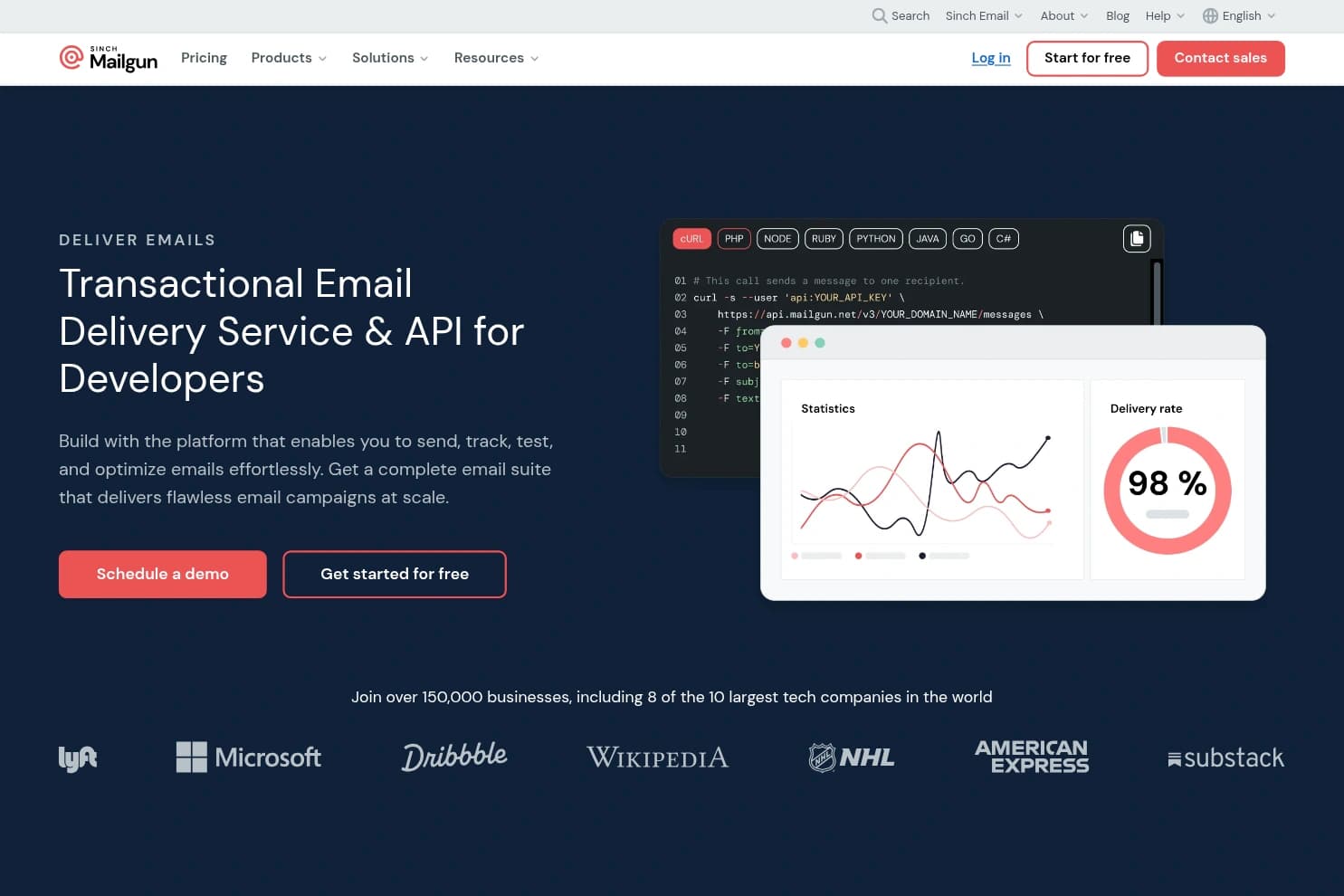
Mailgun offers an email validation API alongside its transactional sending. It's developer-first: clean API, good docs, sensible latency. The fit is product signup flows and form validation rather than outbound list hygiene — and note Mailgun's terms prohibit using its sending for cold outreach.
Best for: Engineering teams embedding validation into product signup and forms.
Use our catch-all email verification guide to distinguish domain acceptance from a confirmed mailbox and choose what to do with uncertain results.
The Catch-All Problem, Honestly
Catch-all domains accept mail to any address, so no verifier can tell you whether a specific mailbox exists — the server says yes to everything by design. Some tools charge credits for these inherently uncertain results. The practical approach: risk-score catch-alls, send to them in smaller, monitored batches, and let automatic bounce handling suppress the failures. In DitLead, each paid email verification uses 1 lead credit. Review uncertain results before sending; catch-all status does not establish that an individual mailbox exists.
Which Should You Pick?
- You send cold email: use verification built into the sender — DitLead checks at send time at 1 lead credit per verification.
- You need a one-off deep clean: ZeroBounce or NeverBounce.
- You're sourcing new lists: UpLead verifies at export.
- You're embedding validation in a product: Mailgun's API.
Try send-time verification free: start a DitLead trial or test any single address with the free email checker.